
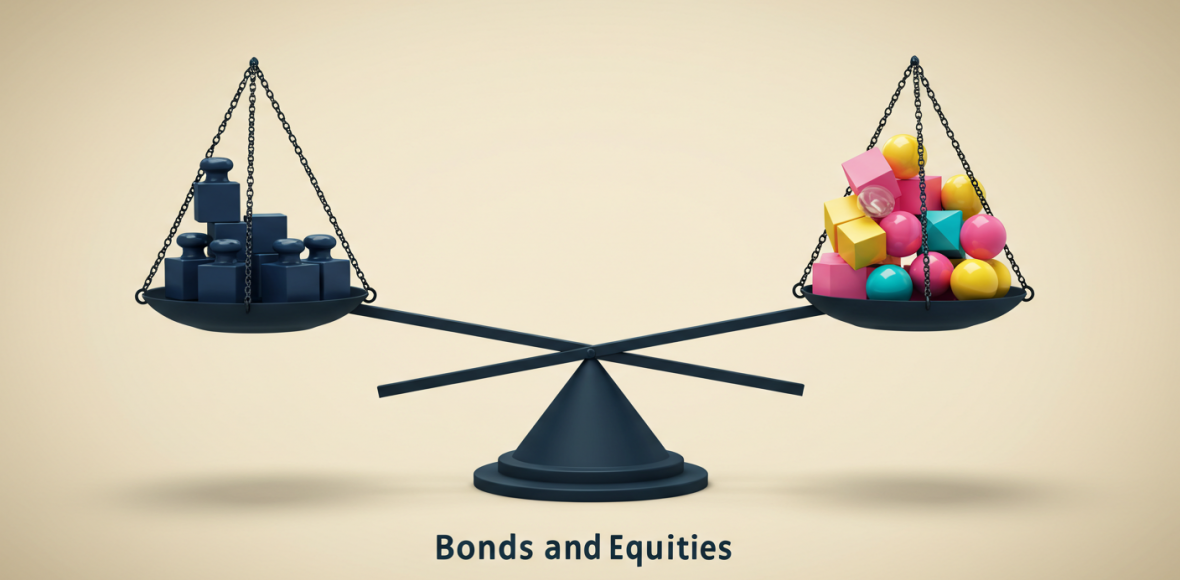
If there’s one thing every smart investor should understand, it’s this: no single asset class has all the answers. The Nigerian market, like many others, has its ups and downs. But the key to riding out those waves and building wealth over time lies in balance—a balanced portfolio made up of both equities and bonds.
Let’s break down why this combination is such a powerful long-term strategy, especially for Nigeria’s rising middle class and capital market professionals.
What Are Equities and Bonds?
Before diving into strategy, let’s simplify the terms: Equities (commonly known as stocks or shares) represent ownership in a company. When you buy shares, you’re essentially buying a slice of the company—and you gain when the company does well through rising share prices or dividends.
Bonds, on the other hand, are like loans you give to governments or companies. In return, they pay you interest over a period. Bonds are considered more stable and predictable, especially in uncertain times.
Together, equities and bonds give your portfolio both the growth potential and the stability it needs.
Why Balance Matters
Managing Risk and Reward
Equities can offer high returns, but they also come with higher risk—prices can be volatile, especially in emerging markets like Nigeria. Bonds tend to be more stable. They provide regular income and help cushion your portfolio when markets are down. A balanced mix gives you the best of both worlds: growth from equities and protection from bonds. Read Understanding Financial Markets and What to Do Before You Start Investing to learn more about investing in stocks and equities.
Smoother Ride Through Market Cycles
When equities are falling, bonds often hold steady or even rise as investors seek safety. During boom periods, equities outperform and drive portfolio growth. This seesaw relationship helps reduce overall volatility—an important factor if you’re saving for the long haul.
Diversification That Works
A mix of assets reduces reliance on one asset class for yields or market segments. For example, if you only invest in bank stocks and there’s a regulatory shake-up, your entire portfolio suffers. But with diversified exposure to both equities and bonds, your financial plan remains on track.
What This Means for the Mass Affluent and Middle Class
As income grows, many Nigerians in the middle class and mass affluent category are seeking reliable ways to grow and protect wealth. Whether you’re building your children’s education fund, planning for retirement, or simply trying to stay ahead of inflation, a portfolio balanced with equities and bonds is essential.
Tips for Building a Balanced Portfolio
- Understand your investment goals and timeline
- Do you have short-term goals? Lean more on bonds
- Do you have long-term goals, such as retirement? Include more equities to capture growth
- Rebalance your investment portfolio regularly
- Check in at least twice a year to adjust your portfolio as needed
- Consider local and global investment opportunities
- Consider Nigerian equities and FGN bonds, but don’t ignore opportunities in international markets.
- Work with a financial advisor
- An expert can help you design a strategy that matches your risk tolerance and lifestyle.
Portfolio Balance is Smart
In a world where market headlines can be noisy and unpredictable, balance is your best defense. Combining equities’ long-term growth with bonds’ stability gives your portfolio the tools to grow steadily and endure whatever comes next.
Are you building wealth or managing a growing portfolio? Remember: the key to financial success isn’t chasing trends—it’s sticking with a well-balanced plan.
For more enquiries, Tel: 02012272571, 02012272572 and 02012272573 or email crc@coronationsl.com
Related Posts
Dangote Refinery IPO: What Nigerian Investors Need to Know

The Dangote Refinery has been one of Nigeria’s biggest industrial ambitions, a refinery built to transform how the country produces, Read more
What to Look for in a Digital Investment Platform
The number of Nigerians investing through digital platforms has grown significantly in recent years. Lower barriers to entry, mobile-first experiences Read more
Treasury Bills vs FGN Bonds: Choosing the Right Investment Strategy
Nigerian fixed-income markets are offering some of the most attractive yields in recent memory. With Treasury Bill stop rates at Read more
Why Investors Buy High and Sell Low: Behavioural Finance Explained
Most investors know the principle: buy low, sell high. Yet across markets and generations, the opposite pattern repeats. Investors buy Read more