
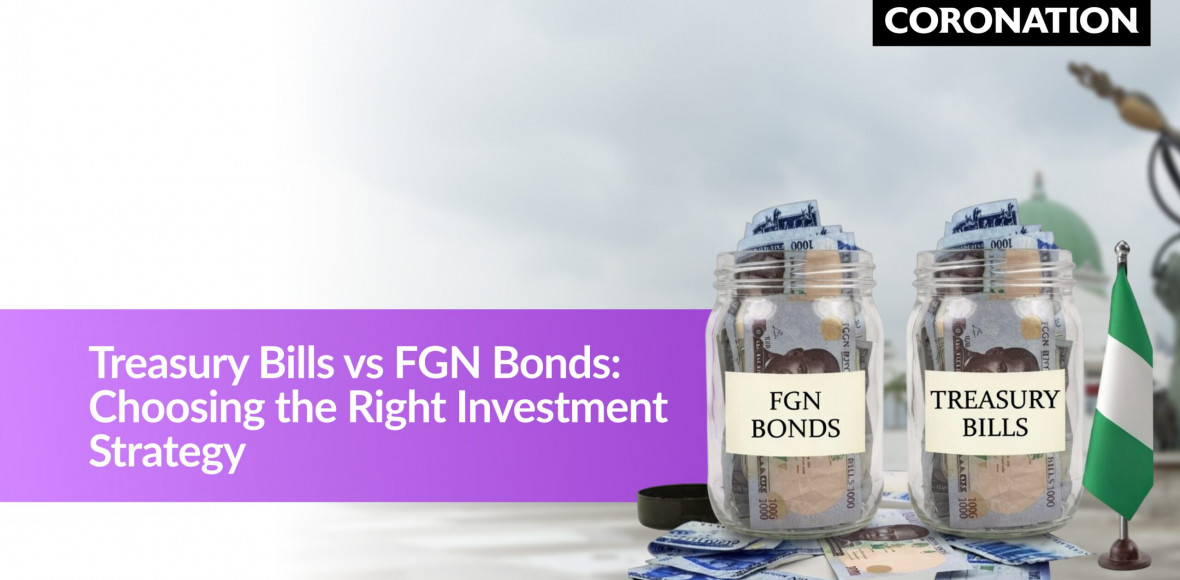
Nigerian fixed-income markets are offering some of the most attractive yields in recent memory. With Treasury Bill stop rates at 17.59% at recent auctions and FGN Bond yields ranging between 17.15% and 17.79% across key tenors, investors have compelling options for deploying capital into government-backed securities
Yet the question is not simply “Which offers the highest return?”
A better question is: which investment aligns with your financial goals, time horizon and need for liquidity?
For investors looking to add fixed-income instruments to their portfolios, Treasury Bills and FGN Bonds are two distinct options worth understanding. Both are government-backed securities, but they work differently and serve different purposes within an investment strategy.
Treasury Bills: Short-Term Flexibility
Treasury Bills are short-term government securities issued by the Debit Management Office, with tenors of 91, 182 and 364 days.
They are issued at a discount to their face value and redeemed at par at maturity. The return is the difference between the purchase price and the face value received at maturity.
Current context: At recent auctions, the 364-day T-Bill has been clearing at approximately 17.59%, making it competitive with many deposit products while carrying sovereign credit risk rather than bank credit risk.
However, the shorter-term nature of T-Bills means investors face reinvestment risk. When each instrument matures, the return available on a new T-Bill may be higher or lower than what was previously available, depending on monetary policy direction and market liquidity.
FGN Bonds: Investing With a Longer View
FGN Bonds are longer-term government securities with tenors typically ranging from 5 to 30 years. Unlike T-Bills, they pay periodic coupon interest (usually semi-annually) throughout their tenor, with the principal repaid at maturity.
For an investor focused on longer-term wealth planning, FGN Bonds provide a more structured and predictable income stream. The coupon payments create regular cash flow, which can be particularly valuable for investors seeking income rather than pure capital appreciation.
Current context: FGN Bonds across the 10-year tenor are currently yielding approximately 16.85%, offering a premium over shorter-dated instruments in exchange for the longer commitment
Longer-term investing carries its own considerations. If a bond is sold before maturity on the secondary market, its price may be higher or lower than the original purchase price, depending on prevailing interest rates. When rates rise, existing bond prices typically fall; when rates decline, bond prices typically rise. This interest rate sensitivity (duration risk) makes understanding the investment horizon particularly important.
Which One Should You Choose?
There is no universal answer. The right choice depends on what the capital needs to achieve.
| If your priority is… | You may consider… |
| Shorter investment horizon (under 12 months) | Treasury Bills |
| Capital preservation with a defined maturity | A combination of both |
| Longer-term investment (2+ years) | FGN Bonds |
| Regular periodic income (coupon payments) | FGN Bonds |
| Managing liquidity across different time horizons | A combination of both |
| Positioning for potential capital gains if rates decline | FGN Bonds (secondary market) |
The decision should also consider liquidity needs, prevailing market conditions, the direction of monetary policy and overall portfolio strategy.
For many investors, the answer is not choosing one over the other. A laddered approach, combining short-dated T-Bills with longer-dated Bonds, can create a more balanced fixed-income allocation that provides both liquidity and yield.
Look Beyond the Rate
When comparing fixed-income investments, it is tempting to focus solely on the headline rate.
An informed decision goes further. Consider:
• When do you need the capital back?
• How long are you comfortable committing it?
• Do you need periodic income or is a lump-sum return at maturity acceptable?
• What role does this investment play within your broader portfolio?
• What is your view on the direction of interest rates?
A higher rate does not automatically make an investment more suitable if its tenor does not align with your plans or if the duration risk is inconsistent with your outlook.
Coronation Securities: Fixed-Income Expertise
At Coronation Securities, fixed income is a core competency. Clients benefit from:
• Primary market access: Direct participation in NTB auctions and FGN Bond offers
• Secondary market execution: Ability to buy and sell existing instruments before maturity
• Dedicated advisory: Relationship Managers who can help structure a fixed-income allocation aligned with specific objectives
• Research-backed guidance: Regular market commentary on rate direction, auction results and portfolio positioning
Whether you are looking to manage short-term liquidity with Treasury Bills or take a longer-term position with FGN Bonds, the objective is the same: make informed investment decisions that align with your financial goals.
Explore Treasury Bills and FGN Bonds with Coronation Securities and choose the fixed-income strategy that aligns with your investment horizon, income needs and liquidity requirements.
For more information, contact us at coronationsecuritiesfidesk@coronationsl.com
Related Posts
What to Look for in a Digital Investment Platform

The number of Nigerians investing through digital platforms has grown significantly in recent years. Lower barriers to entry, mobile-first experiences Read more
Why Investors Buy High and Sell Low: Behavioural Finance Explained
Most investors know the principle: buy low, sell high. Yet across markets and generations, the opposite pattern repeats. Investors buy Read more
Designing the Shareholder Journey: From Friction to Delight
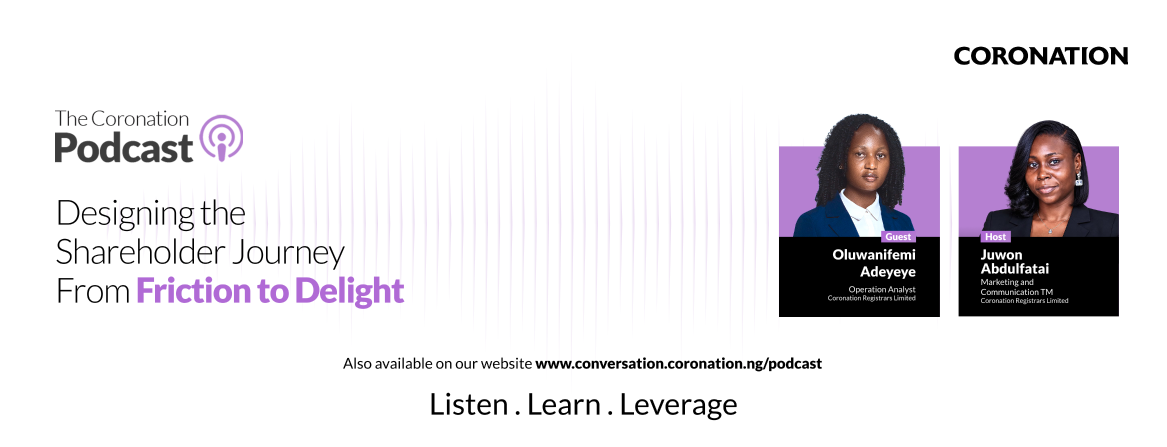
In this episode of the Coronation Registrars Podcast Series, host Abdulfatai Juwon is joined by Oluwanifemi Adeyeye, Operations Analyst at Coronation Registrars, to Read more
Regulatory Roundtable: What’s New from SEC and NGX for Registrars
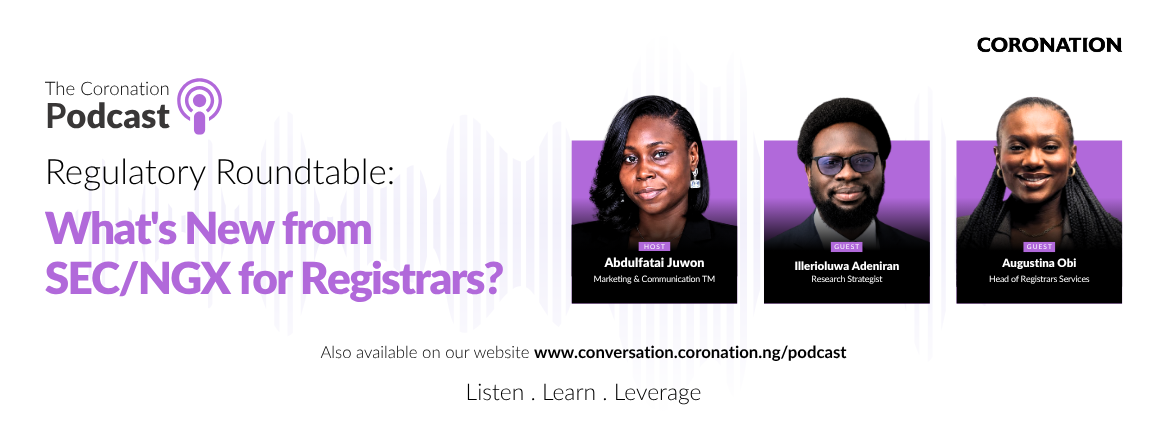
In this episode of the Coronation Registrars Podcast Series, Augustina Obi, Head of Registrars Services, and Illerioluwa Adeniran, Research Strategist at Coronation Read more