

Why secure access matters in estate planning
A family may know that a Will exists. They may even know that lawyers were involved and that instructions were carefully considered. Yet when the time comes to act, the most urgent question may still be painfully simple: where is the latest signed copy?
A Will is intended to provide clarity. It records important wishes, guides those left behind, and helps reduce uncertainty during a difficult period. But that clarity depends on more than the existence of the document. It also depends on whether the Will and related estate planning records can be located, identified, and accessed by the appropriate people when needed.
This is one of the most overlooked risks in estate planning.
The overlooked gap between planning and access
In many families, important documents are not held in one organised place. A Will may be stored with a lawyer, placed in a physical file, saved on a personal device, or referenced in an email thread. Supporting information may sit across bank records, investment statements, insurance documents, property files, company records, cloud folders, or personal notebooks.
In some cases, the only person who understands where everything is kept is the person whose estate is being planned.
When that happens, even a properly prepared Will can become difficult to act on. Family members may not know whether they have the most recent version. Advisers may need time to verify documents. Executors or trustees may have to search for supporting records before they can understand the full picture. Access to information may depend on passwords, private email accounts, devices, or informal arrangements that were never designed for continuity.
At an already sensitive time, these gaps can create avoidable delay, confusion, and anxiety.
Estate planning now has a digital dimension
Today, more personal and financial information exists digitally than ever before. Individuals and families often manage assets, correspondence, statements, policies, and instructions across several channels. This is especially true for professionals, entrepreneurs, business owners, and families with multiple assets, dependants, advisers, or succession considerations.
As a result, estate planning should not stop at writing a Will. It should also consider how the Will, supporting documents, and key instructions are stored, updated, and made accessible through appropriate channels.
The question is no longer only “Have I written a Will?” It is also “Can the right people find the right documents when they need them?”
What should be easy to locate?
Every estate plan is different, but certain records are often important for clarity and continuity. These may include the latest executed Will, any codicils or amendments, trust documents, asset schedules, property records, insurance policies, pension or retirement records, business ownership documents, adviser contact details, and instructions that may assist executors, trustees, or family representatives.
The goal is not to make private information widely available. The goal is to ensure that important information is properly organised, securely maintained, and accessible only to the appropriate people through the right process.
This distinction matters. Estate planning is not simply a matter of storing documents. It is about creating a framework that supports confidentiality, control, and continuity.
How a structured approach can help
A structured estate planning document framework can help reduce uncertainty by making it easier to identify where key documents are held, which version is current, and who should be contacted when the documents are required. It can also help families and advisers avoid relying on scattered records, informal instructions, or one person’s memory.
For individuals with complex assets or family responsibilities, this structure can be especially important. It supports better coordination, helps preserve intentions, and gives authorised parties a clearer path to follow when decisions need to be made.
At Coronation Trustees, we work with individuals and families to approach estate planning with the structure, discretion, and continuity required to support long-term legacy planning. Our role is to help clients think beyond document preparation and consider how important estate planning records can be organised, safeguarded, and accessed through appropriate channels.
Because a Will is not simply about documenting wishes. It is about helping the appropriate people understand and act on those wishes with greater clarity when the time comes.
The question is no longer just whether you have written a Will. It is whether the people who need it will be able to find it.
Speak with Coronation Trustees to explore how a structured approach to estate planning documents can support secure custody, appropriate access, and continuity for your family.
You may reach us at crc@coronationnt.com or 0201-227-1720.
Related Posts
Our Portal Lets You Do Create a Will in Just a Few Clicks


When many people hear the word Will, they immediately think of courtrooms, piles of paperwork, and expensive legal fees. For Read more
Think making a Will is complicated? our portal lets you do it in just a few clicks

Planning how your property and digital assets will be managed when you’re gone is a difficult subject, but it’s a Read more
Are You Thinking About Your Family’s Security the Right Way?
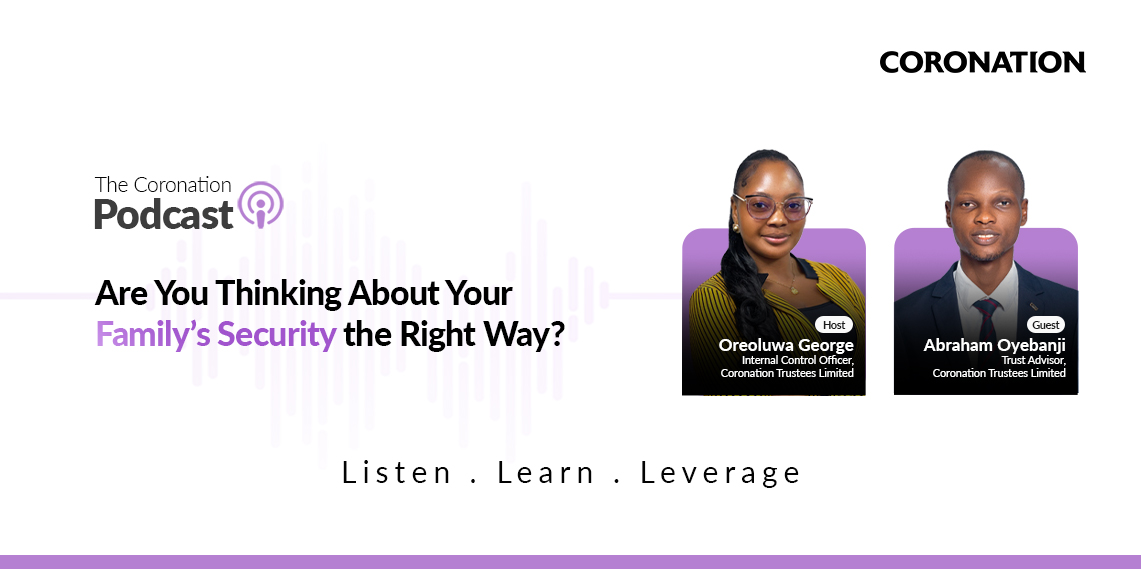
New Episode Alert! Are You Thinking About Your Family’s Security the Right Way? Join Oreoluwa George, Internal Control Officer, Coronation Read more